
Six or eight hours? Start with the moments you want photographed and where they happen. A compact wedding at one venue can fit comfortably into six hours. Getting ready in separate places, traveling between venues or keeping the photographer later into the reception can make eight hours a better fit.
The useful question is what happens between the first photograph and the last. Here’s how to work that out before choosing a collection.
Start with the first and last moments
Write down your ceremony time, where you’ll get ready and which reception events matter most to you. Then choose the earliest moment you want covered and the latest one you would be disappointed to miss.
If coverage starts at 2 p.m. and ends at 8 p.m., that is six hours. A long gap between the ceremony and dinner still sits inside that window. Ask how travel, breaks and additional time are handled in the written proposal rather than assuming the clock pauses.
When six hours can work well
Six hours is worth considering when the ceremony and reception are in one place, your portrait list is manageable and you’re comfortable with coverage ending after the main reception events. You may choose to photograph the final stages of getting ready instead of the entire morning.
A first look can move some portraits before the ceremony. It doesn’t eliminate portrait time, and you don’t need to choose one just to fit a package. If seeing each other at the aisle matters to you, build enough time after the ceremony for family, wedding party and couple photographs.
Sample six-hour timeline: 2–8 p.m.
This example assumes a 4 p.m. ceremony, a first look and one venue. It is an illustration, not a schedule from a specific wedding or a promise that every day will fit.
| Time | Photography focus |
|---|---|
| 2:00 p.m. | Final getting-ready moments and a few meaningful details. |
| 2:30 p.m. | First look, couple portraits and wedding party photographs. |
| 3:30 p.m. | Time to tuck away, refresh and photograph arriving guests. |
| 4:00 p.m. | Ceremony. |
| 4:30 p.m. | Family portraits, followed by candid cocktail-hour coverage. |
| 6:00 p.m. | Reception entrance and dinner. |
| 7:00 p.m. | Toasts and planned dances, then some open dancing. |
| 8:00 p.m. | Photography coverage ends. |
If your ceremony lasts longer, the family list grows or dinner starts later, this schedule needs to change. Build the timeline with your venue, planner and photographer before treating six hours as the answer.
What eight hours gives you
Eight hours gives you two more hours to place where they help most. That could mean an earlier start for getting ready, a later finish for dancing, or more breathing room around travel and portraits.
Using the same 4 p.m. ceremony as an example, coverage from 1–9 p.m. could add an hour of preparations at the beginning and an hour of reception coverage at the end. If preparations matter more than late-night dancing, noon–8 p.m. may be a better use of those eight hours.
Eight hours still has a finish time. A 1 p.m. start will not include an 11 p.m. exit. If that exit is a priority, discuss a later start or a longer coverage window before booking.
Leave room for Michigan light and travel
Check the sunset time for your actual date and location before placing outdoor portraits on the schedule. A summer evening and a late-fall afternoon offer very different daylight windows. Buildings, trees and the venue’s orientation can also change when a portrait location loses usable light.
For a Detroit hotel, ceremony site and reception venue on the same day, include parking, loading, walking and gathering everyone, not just the drive shown on a map. The same applies to a wedding spread across locations in Ann Arbor, Lansing or Grand Rapids.
Choose an indoor or covered portrait option with your venue, and leave a buffer for weather and small delays. A plan that uses every minute on paper leaves little room to enjoy the day.
Plan the portraits that matter
Make a short family list with names and groupings, and ask someone who knows both families to help gather people. Tell your photographer about mobility needs and any family dynamics that affect how the groups should be arranged.
Decide how much of cocktail hour you want to spend with guests. That helps determine which portraits to make earlier and how much time to reserve after the ceremony. If photo and film are both part of the day, coordinate their portrait and audio needs in the same timeline.
See how a real wedding story unfolds
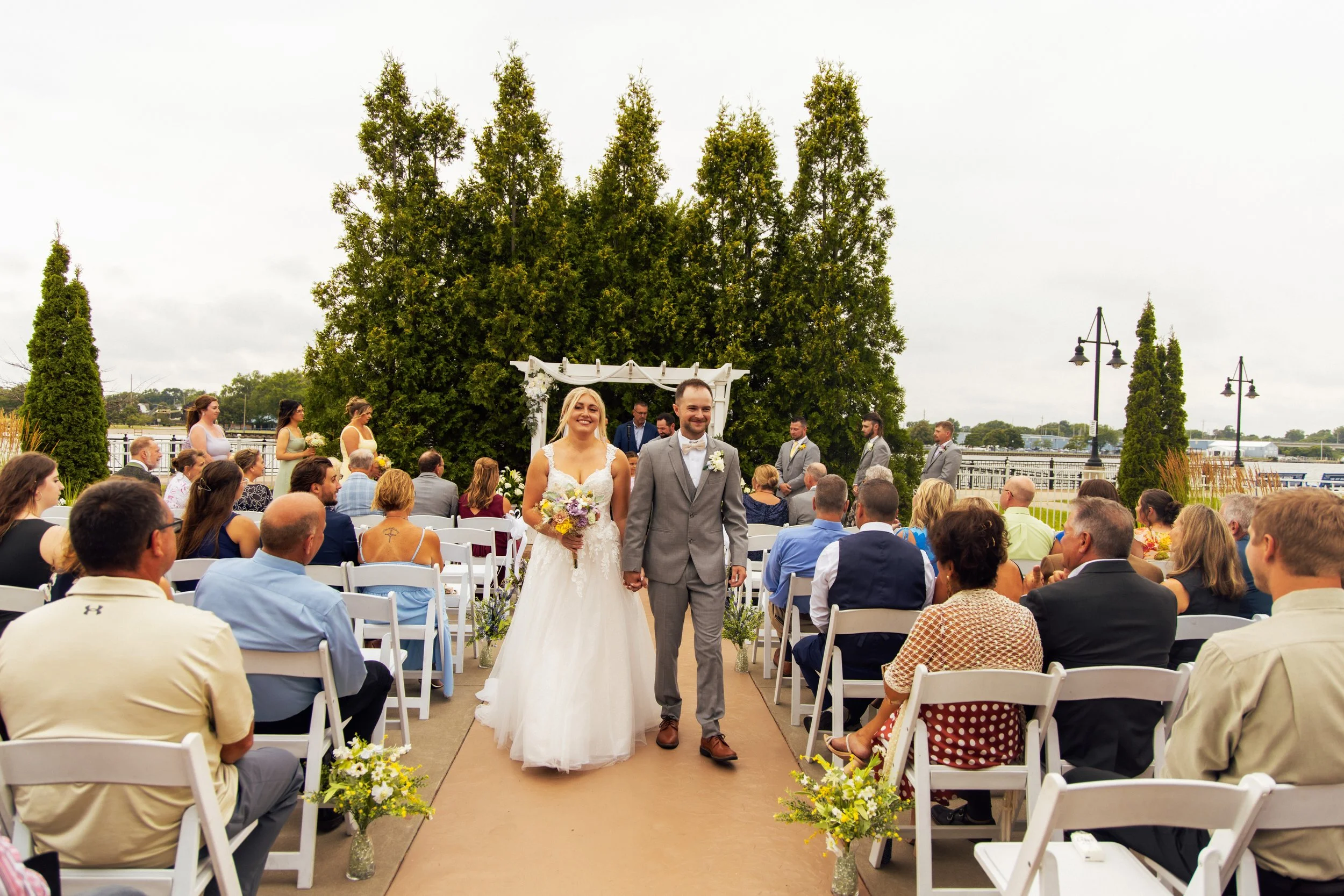
Look through Noah and Jenna’s DoubleTree Bay City wedding for preparations, an outdoor ceremony and waterfront portraits. Notice the mix of people, details and moments you would want in your own gallery. The photographs here are from their wedding; the sample timeline above is not.
You can explore more Michigan wedding stories and compare the types of coverage that matter to you.
Choose the hours, then compare the collection
A second photographer can cover another angle or simultaneous preparations, but doesn’t extend the coverage window on its own. Confirm each photographer’s hours, the final deliverables and the cost of additional time in your quote.
For pricing context, read the Detroit wedding photography cost guide, then review the current reBrand photography collections. The right comparison includes both the hours and what comes with them.
Bring your date, locations, ceremony time and a few must-have moments to the conversation. We can work through where six hours feels comfortable and where eight would give you more room.